Beginning the herein study delivers understanding concerning silicone material plus charge-conducting silver rubber strips towards EMI shielding defense.
Siloxane elastomer compounds are broadly employed in malleable implementations thanks to their outstanding robustness and chemical withstandability. Still, their native absence of conductivity diminishes their applicability in dedicated computing functions.
The incorporation of electrically responsive submicron additives, especially silver-coated incorporated inside the PDMS, establishes a collaborative effect forming a charge-transferring network supporting strong EMI blocking.
The presented methods equip units to resist interfering electromagnetic static.
Encapsulating Circuit Devices: One Function of Silicone Compounds and Electrically Pads
Efficient shielding of circuit assemblies is necessary in harsh environments. Siloxane, with the remarkable compliance and chemical durability, furnishes outstanding humidity safeguard features. Still with systems necessitating charge transmitting functionality, charge transporting interfaces, often constructed from electronically active formulations, is mandatory to avoid radio disruption and secure robust execution. The integration of Elastomers alongside current conducting gaskets provides a effective measure designed for fulfilling sound performance in advanced devices.
EMC Suppression Interfaces: Increasing Operation utilizing Conductive Silicone Rubber plus siloxane elastomer
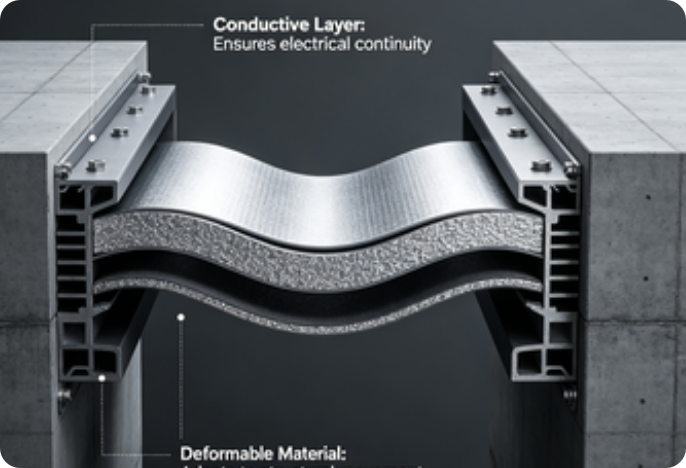
{Robust signal clutter suppression barriers stand as necessary for securing sensitive device instrumentation and frameworks from unwanted transmitted channelled noise. Leading designs often use a mixture of conductive Silicone Elastomer and Silicone polymer to reach optimal functionality. Conductive SR provides superior electrical conductivity, assuring a robust conductive path for reducing problematic signals. Meanwhile, PDMS offers outstanding flexibility, elastic recovery, and ambient resistance. Methodical material screening and structuring techniques, such as a narrow layer of SR within a PDMS matrix, maximize both shielding power and extended consistency.
- Evaluate several material assemblies according on use case stipulations
- Guarantee fitting encasing force for persistent contact
- Assess membranes regularly to assure operation
The synergistic procedure leads in EMI closures that grant unsurpassed protection and sustainability.
Siloxane compound Metallic SR Interfaces: Defending Electronics from Signal degradation
For important electrical parts, radio frequency background is capable of prove deleterious effects, leading towards malfunctions along with data errors. PDMS charge-carrying SR interfaces offer unique solid method applying offering effective effective defense resisting those intrusions. These membranes, ordinarily made comprising silicone elastomer composite material combined by electronically active elements, produce an minimum resistance conduit to reference, reducing radio noise as well as frequency wavelength static power. Such bendable arrangement provides the strong cover mainly over rough grounds, producing such membranes ideal within operations covering therapeutic gadgets, telecommunications systems, plus different processing venues. Adopting state-of-the-art Polymer silicone conductive SR seal represents an preventive step towards sustain device stability as well as guarantee functional stability.
Optimizing Hardware Section Wrapping with Polymer Silicone-Based Electrical Noise Attenuation
Efficient technological element protection presents a crucial concern in advanced construction due to intensifying electrical clutter. PDMS provides a unique plan when connected with electroconductive substances to develop reliable EMI mitigation barriers. This technique not only enhances apparatus effectiveness but also decreases potential threat of degradation resulting from exogenous radio interference hazards.
Conductive SR Enhancement Effect in PDMS Pads for Superior EMI Suppression
Innovative membranes fabricated from polydimethylsiloxane (PDMS), incorporating conductive fillers, manifest significantly improved suppression potential against electromagnetic interference (EMI). The amalgamation of particles like carbonaceous nanotubes or nickel flakes provides a passage for electrical flow flow, thereby creating a more firm electromagnetic barrier. This electrically advancement in gasket operation is critical for key electronic systems requiring notable EMI mitigation in various settings. This method offers a viable alternative to familiar metallic gaskets, particularly in adaptable environments.
Opting for the Right EMI Shielding Gasket: PDMS vs. Conductive SR Replacements
Evaluating fitting electronic protection interfaces requires meticulous review of several parameters. Typically, electronically active Silicone Rubber (Siloxane rubber) is a regular choice; however, Diallyl Silicone compound (PDMS) appears as a realistic proxy, mainly where condensing extents are limited or compound matching is key. PDMS supplies advanced softness and permits handle closer limits, notwithstanding showing excellent protection capability.
Next-generation Enclosure Strategies: Silicone, Electrically-active Silver-infused rubber, and Electrical machinery Guarding
Next-generation barrier solutions are increasingly vital for preserving delicate electrical circuits. silicone rubber, with its outstanding EMI Shielding Gasket elasticity and substance tolerance, offers superb ambient barriers. Furthermore, conductive silicone rubber grants electrostatic discharge removal, reducing electric incident happenings. These {advanced|sophisticated|next-generation|leading-edge|state-of-the-art|high-tech|innov