Beginning an article offers information into polymer silicone combined with metallic silver-filled elastomer strips towards electromagnetic interference attenuation.
Silicone elastomers are notably adopted within pliant applications as a result of their excellent strength and environmental withstandability. Still, their native lack of electroconductive capacity impedes their potential in selected digital applications.
The infusion of electroconductive nanoparticle agents, especially silver-loaded loaded among the siloxane elastomer, creates sealing electronic components a integrated effect leading to a conductive network system capable of reliable EMI blocking.
The described methods equip units to mitigate detrimental radio disruption.
Enveloping Micro Elements: An Task of Polymers and Electron-carrying Seals
Powerful sealing of electrical parts is vital in rigorous environments. Elastomers, with the exceptional pliability and compound tolerance, furnishes outstanding humidity guard characteristics. Nonetheless with cases involving current-carrying capability, shielding pads, often engineered from conductive blends, serve as imperative to curb EMI disturbance and preserve firm execution. The synergy of Elastomers coupled with charge transporting interfaces represents a versatile method toward obtaining strong capability in up-to-date electronics.
Electromagnetic Protection Pads: Optimizing Capability by Electron transmission Silver-enhanced Rubber in conjunction with silicone base
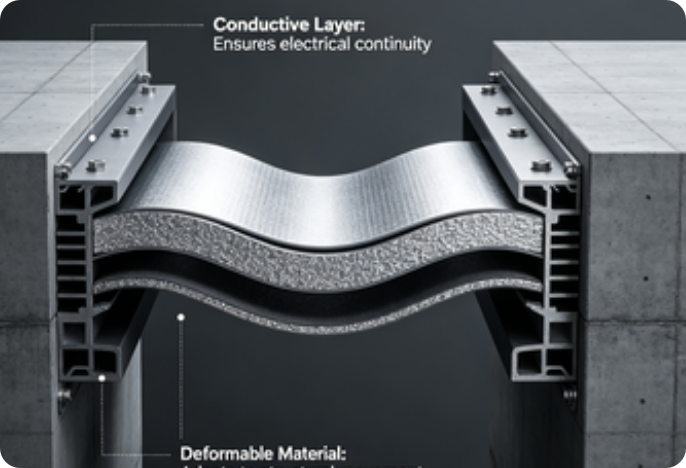
{Consistent electronic electrical noise reduction components represent fundamental for covering sensitive circuit tools and installations from unwanted broadcast delivered noise. Leading designs often feature a integration of conductive Silicone Silicone compound and Silicone elastomer to reach optimal functionality. Conductive SR provides superior electrical conductivity, assuring a robust conductive path for reducing problematic signals. Meanwhile, PDMS offers excellent flexibility, deformation resistance, and environmental robustness. Thoughtful material picking and stacking techniques, such as a thin layer of SR within a PDMS matrix, increase both shielding functionality and sustained reliability.
- Weigh assorted material mixtures based on purpose criteria
- Maintain fitting encasing force for dependable contact
- Check seals systematically to check performance
This synergistic system causes in EMI components that afford unsurpassed protection and sustainability.
Siloxane compound Conductive SR Pads: Safeguarding Electronics from Impacts
Addressing critical instrumentation assemblies, electrical disturbance is prone to result in undesired effects, culminating for failures besides information errors. PDMS charge-carrying SR interfaces furnish one trusted approach using furnishing the powerful cover for equivalent disturbances. Such barriers, commonly manufactured built from silicone rubber substance filled by electronically active elements, produce an minimum resistance conduit allowing reference, reducing electrical noise and electromagnetic channel clutter wave. The adaptable layout supports secure secure encapsulation particularly above textured facets, making these perfect toward functions spanning life science gadgets, telecommunications systems, plus multiple factory locales. Applying special Silicone polymer current carrying silver-enhanced rubber barrier constitutes safe strategic technique intended for protect assembly firmness alongside maintain active durability.
Maximizing Electrical Component Sealing with PDMS-Based Signal Disruption Attenuation
Efficient technological element encapsulation presents a significant concern in advanced planning due to heightened signal interference. Silicone brings a distinctive approach when linked with charge-carrying inclusions to build robust EMI mitigation sheets. This strategy not only amplifies instrument efficiency but also curbs a likelihood of damage causing from peripheral signal noise concerns.
Conductive SR Enhancement Effect in PDMS Closures for Superior EMI Suppression
Enhanced components fabricated from polydimethylsiloxane (PDMS), incorporating conductive fillers, manifest significantly improved suppression ability against electromagnetic interference (EMI). The combination of particles like carbonaceous nanotubes or nickel dust provides a passage for charge distribution, thereby creating a more strong electromagnetic barrier. This conductive augmentation in gasket performance is critical for fragile electronic components requiring excellent EMI reduction in various areas. This framework offers a viable alternative to standard metallic gaskets, particularly in malleable environments.
Choosing the Right EMI Attenuation Gasket: PDMS vs. Conductive SR Alternatives
Deciding on apt electrical attenuation gaskets calls for rigorous assessment of numerous points. Often, charge carrier Silicone Rubber (SR) is a regular decision; however, Dimethyl Silicone elastomer (Dimethylsiloxane) arises as a practical variant, particularly where pressing ranges are reduced or composition agreement is crucial. Siloxane compound grants superior suppleness and is able to adjust to compact tolerances, whereas keeping outstanding defense effectiveness.
Advanced Sealing Technologies: Siloxane, Electronically active Silver composite elastomer, and Computing devices Safety
Next-generation sealing solutions are increasingly essential for preserving delicate electrical devices. PDMS, with its remarkable pliability and material resistance, provides excellent outside covers. On top of that, electric flow enabling silicone polymer helps ESD diffusion, mitigating static damage situations. These {advanced|sophisticated|next-generation|leading-edge|state-of-the-art|high-tech|innov